
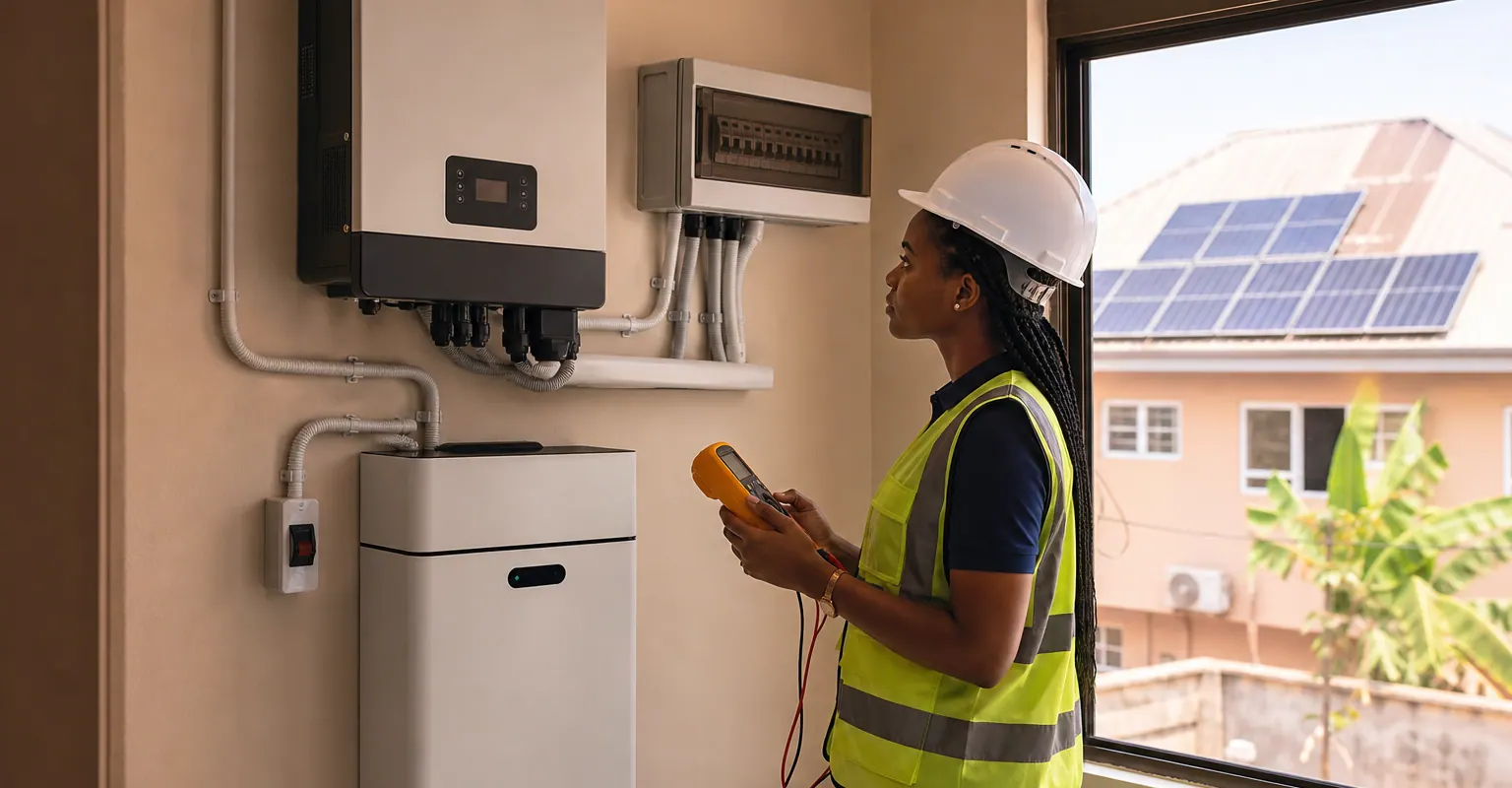
Keeping a fridge and freezer running is often the main reason a household or shop considers solar. Start by identifying the exact appliances and how they are used. A small domestic fridge, an upright display cabinet and a chest freezer can have different operating patterns even when their labels show similar running watts.
Measure energy over a useful period
An energy label may state annual kWh under test conditions. Dividing that figure by 365 gives a test-based daily estimate, not a guarantee for a hot kitchen or frequently opened shop freezer. Where practical, ask for suitable energy logging over representative operation, including defrost cycles and busy periods. Use a device rated for the appliance; do not improvise wiring to measure it.
A worked energy example, not a model recommendation
Assume measured daily use of 1.2kWh for a fridge and 1.8kWh for a freezer: together they use 3kWh in 24 hours. If a measurement shows 1.5kWh is needed during the chosen backup interval, an illustrative 80% allowed discharge and 90% inverter efficiency imply about 2.1kWh nominal battery energy before reserve. Do not simply halve a daily figure unless the actual operating pattern supports that assumption.
Check the start as well as the day’s energy
A battery may hold enough kWh but still be unable to deliver the required starting power. Check the compressor’s documented starting demand, the solar inverter’s surge capability and duration, the battery’s current limits and the other loads that may already be running. There is no universal fridge-to-inverter size rule that replaces these checks.
Prioritise the right circuit
If preserving food is the priority, include that in the design. A separate essential-load arrangement can prevent a kettle, pump or AC from consuming the reserve intended for refrigeration. Confirm appropriate protection, manufacturer restart requirements and what staff or household members should do when the battery is low.
Temperature-sensitive businesses need more than an estimated electrical runtime. Discuss alarms, fallback supply, temperature logging and an outage plan with a qualified specialist. This guide is not a cold-chain or medical-storage approval, and solar capacity alone does not establish temperature compliance.