
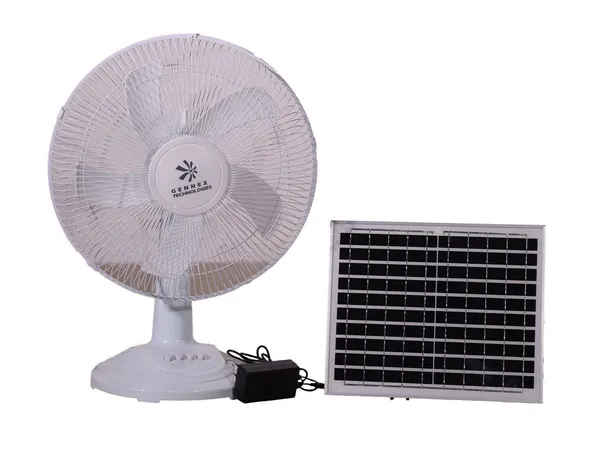
Two solar fans can look almost identical and still behave differently overnight. Battery voltage, capacity, fan speed and extra functions all matter. Before comparing headline hours, ask which model variant, battery and test speed the claim describes.
Read the battery label in watt-hours
Nominal Wh = voltage × Ah. As a hypothetical example, a 7.4V, 4Ah pack stores 29.6Wh nominal. This is not a rating for a Joshville fan. To compare a second fan, convert its battery to Wh too; comparing 4Ah at one voltage with 6Ah at another can be misleading.
Allow for the energy that actually reaches the motor
Suppose that hypothetical pack permits 80% of its nominal energy to be used and the power path delivers 90% of that to the fan. The estimate becomes 29.6 × 0.8 × 0.9 = about 21.3Wh. At an assumed average 12W, that is about 1.8 hours. Different approved discharge limits or fan power give a different answer. Do not apply these assumptions as instructions to change a battery cutoff.
Compare the speed you will really use
A low-speed demonstration may not represent a hot bedroom where you use high speed. Ask for runtime at the relevant setting, airflow information if documented, and whether built-in lights or USB charging were active. A fan that runs longer by moving less air is not automatically the better choice for your room.
Charging time is a separate question
The included panel must power the fan and replenish any battery energy used during the day. A panel’s headline watts are not a constant charging rate. Shade, weather, charger limits and simultaneous fan operation all affect the energy left for night use. Use the approved charging arrangement; do not substitute a larger panel solely because its wattage looks attractive.
- Ask for the exact model, battery voltage and Ah or Wh.
- Confirm runtime at your intended speed and the conditions behind it.
- Confirm the supplied panel, adapter, cable and supported charging inputs.
- Check replacement-battery availability and warranty terms before paying.