
An office cooled from late morning to afternoon and a bedroom cooled overnight can use similar AC units but need different solar designs. Decide when cooling matters most before comparing inverter or battery sizes. Your preferred hours are part of the specification, not a detail to add after purchase.
Daytime operation: match a changing supply to a changing load
When an array is producing, an appropriately designed system may supply the AC while also charging storage. But cloud cover can reduce generation quickly. Confirm whether the system will use a battery, grid or generator when solar is insufficient, and what happens if that fallback is unavailable. Do not assume a panel-only arrangement can start or continuously run any AC.
Overnight operation: put an energy number on the promise
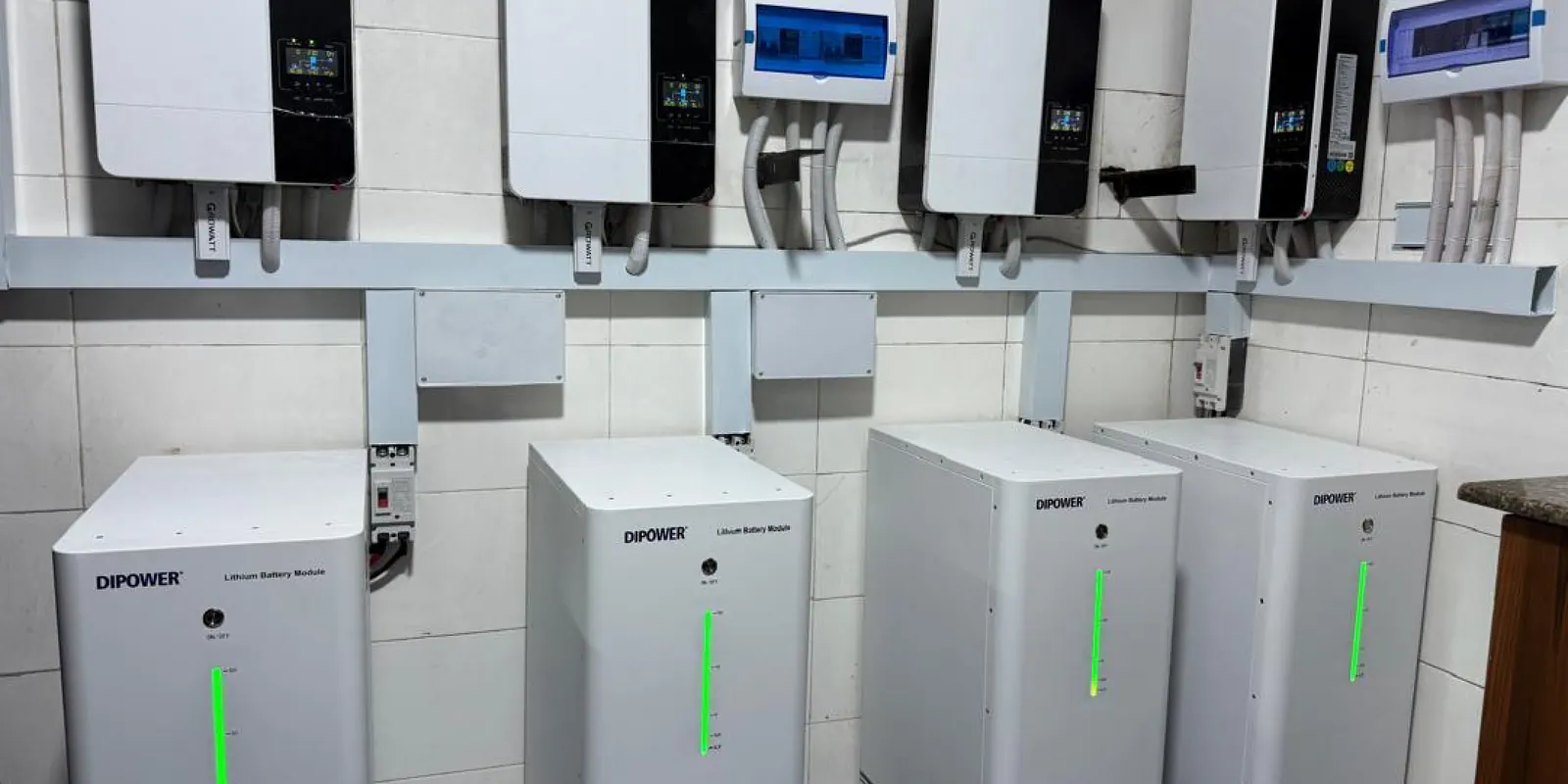
For an illustrative AC averaging 800W for 6 hours, the cooling energy is 4.8kWh. With an assumed 80% allowed battery discharge and 90% inverter efficiency, this alone requires about 6.7kWh nominal storage before reserve and other demand. The 800W assumption must be replaced with data for the exact AC and room.
Two 40W fans running for the same 6 hours add 0.48kWh. The combined 5.28kWh becomes about 7.3kWh nominal under those same assumptions. Include any fridge, router, lighting and inverter idle demand rather than allocating the whole bank to the AC.
The next day’s charging plan matters
The following day’s array must support ongoing daytime demand and restore the planned overnight energy, including losses and reserve requirements. A quote based only on the AC’s nameplate ignores that recovery. Ask how the proposal behaves over a sequence of lower-generation days, not only a clear-day average.
Make the quotation specific
- Name the AC model and room use; HP alone does not establish electrical input.
- Separate daytime cooling hours from battery-only hours.
- List other appliances on the backup circuit and any load priorities.
- Confirm how grid/generator support and low-battery behaviour will work.