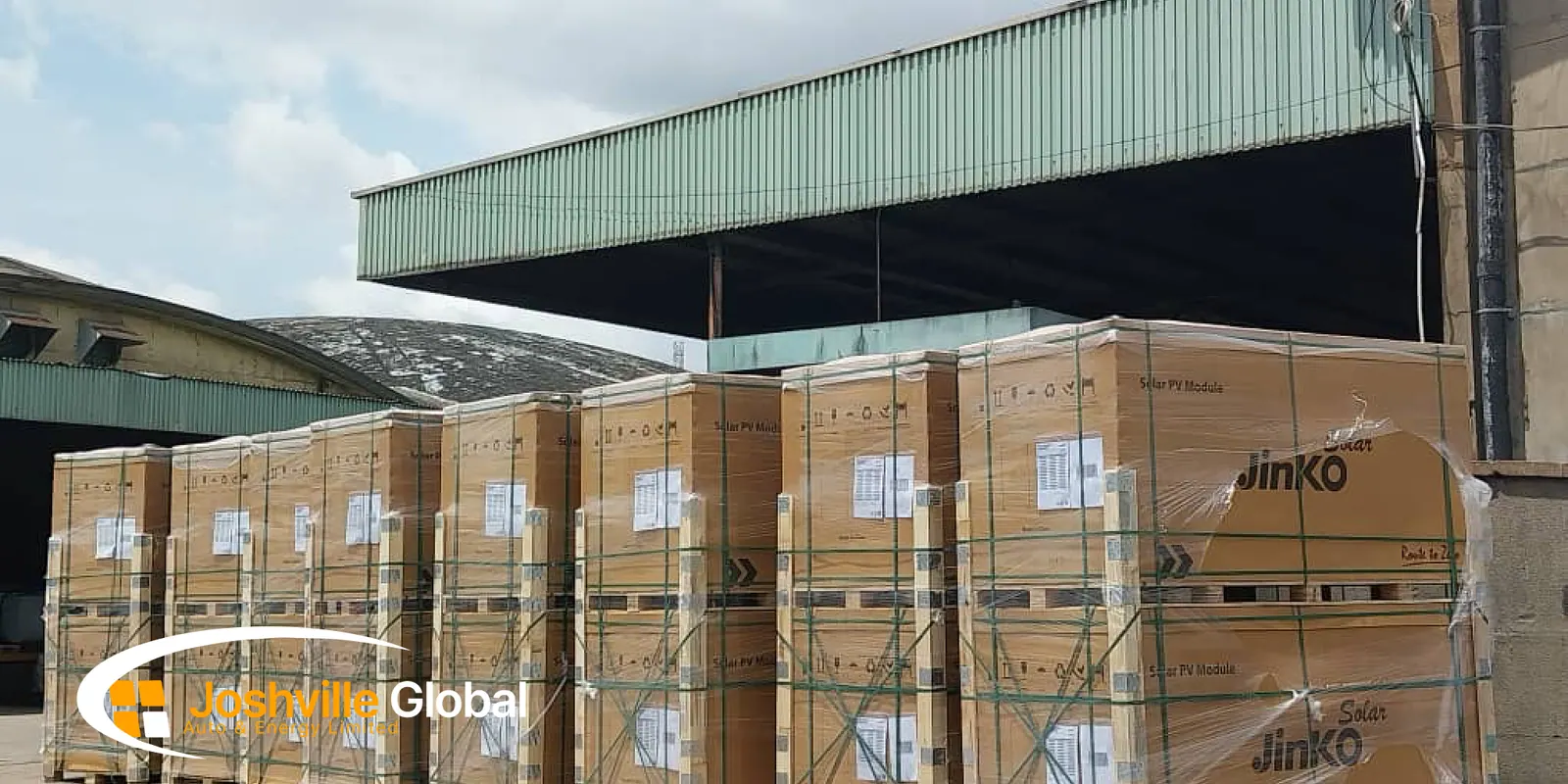
Solar stock is unforgiving. A carton of inverters can be worth more than a month of a small shop's turnover, and batteries carry serial numbers a warranty claim will be judged on years later. Get the process wrong and the loss is rarely dramatic — it is a slow leak of units nobody can account for.
This is how we run it, and why. It is written for anyone holding solar stock at more than one location.
Stock enters on a purchase order
Nothing becomes stock because a supplier said it was shipped. Every item starts as a purchase order recording what was ordered, from whom, at what price and for which branch. When the goods arrive, the delivery is checked against that order line by line, and short or damaged units are flagged while the driver is still there. A delivery that fulfils its order closes it — which is what stops a part-delivered order sitting open for months and quietly getting paid twice.
A supplier invoice is a claim. A verified delivery is stock.
What gets a serial number
Tracking every washer by serial number collapses in the first busy week. Items whose identity matters after the sale — inverters and batteries — are flagged as needing one, and the number is recorded against the order when the unit is sold. Everything else is tracked by quantity. The test: if a warranty claim or dispute would ever turn on which physical unit this was, it needs a number.
Between branches, a transfer — not an edit
The usual way multi-branch stock goes wrong is someone subtracting five at one branch and adding five at another. Between those two actions the stock exists nowhere, and if the second is forgotten it never comes back. Movement is recorded as one transfer instead: pending, in transit, then completed when the receiving branch confirms what actually arrived. Stock on the road stays visible, and an unconfirmed transfer shows up as an open transfer rather than a missing unit.
Off the shelf, and back
Low-stock thresholds raise an alert before a customer finds the gap — running out of a 5kVA hybrid inverter is a lost sale and often a lost installation slot. Sales are handed over against a pickup code, with the serial number recorded against the order, so the customer's warranty is tied to the exact unit they carried out. Returns are processed against the original order with a reason, which makes a recurring fault with one model visible instead of anecdotal.
The system behind it
All of this runs on Suite (suite.ng), set up for the way solar retail actually works here — purchase orders, deliveries, inter-branch transfers, alerts, pickup and returns in one place, across branches and roles, alongside installations. If you are running stock across more than one location on a spreadsheet, the process above matters more than the software; it is just very hard to hold together by hand.