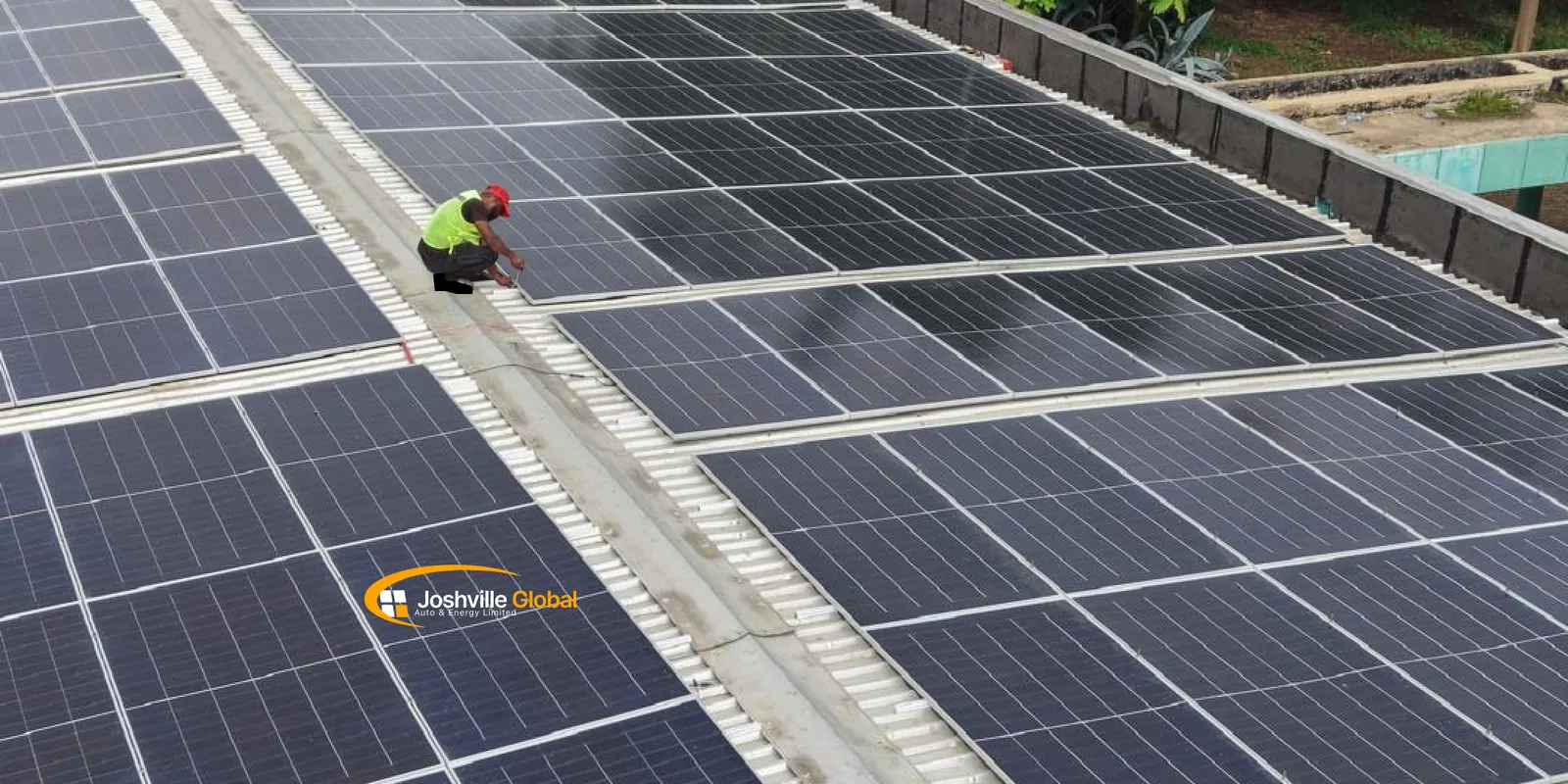
To estimate the number of panels needed, separate battery energy from inverter power. A 10kWh battery stores energy; the panel array must replace the energy used while also supporting daytime appliances.
The basic calculation
Assume the battery needs a full 10kWh replacement, the site receives five equivalent peak-sun hours and the complete charging path is 75% efficient. Required array power is 10kWh ÷ 5h ÷ 0.75 = about 2.67kW.
Five 535W panels total 2.675kW, so five is the mathematical minimum for that simplified clear-day example. It leaves little allowance for daytime consumption, cloud, dust, high panel temperature or a shorter charging window.
Why the practical answer is usually higher
- The refrigerator, fans, office equipment or pumps may consume solar energy while the battery charges.
- Panels rarely hold nameplate output for the entire day.
- Rainy-season production and partial shading reduce harvest.
- The battery may need to recover quickly before evening rather than across the full solar window.
Electrical compatibility comes before panel count
The selected panels must be arranged so string open-circuit voltage, operating voltage and current remain inside the inverter MPPT limits under expected temperatures. A quantity that works mathematically can still be electrically wrong if the string is designed badly.