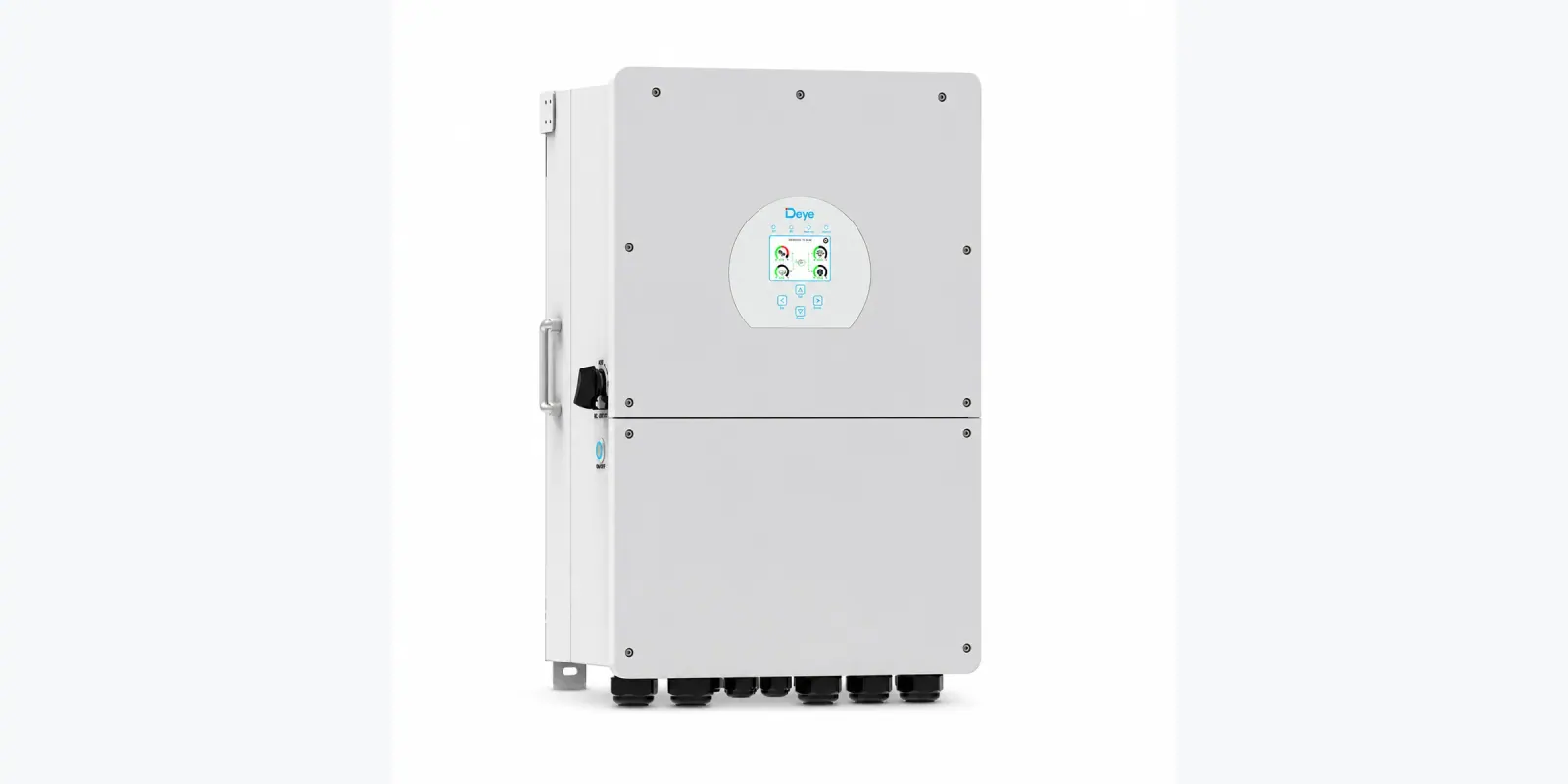
Deye offers hybrid inverters across residential, light-commercial and larger three-phase applications. The correct choice is the model whose electrical limits match the property, battery bank and solar array—not simply the largest unit within budget.
Output capacity and surge
List appliances that may operate together and identify motors or compressors that have starting surges. A properly selected inverter carries the expected continuous load while leaving controlled headroom for temporary peaks and future additions.
Single phase versus three phase
Large homes can still be single phase, while workshops, offices and commercial sites may distribute loads across three phases. Confirm the utility connection, generator arrangement and phase balance before choosing the inverter.
Battery compatibility
Deye models may use low-voltage 48V-class batteries or high-voltage battery stacks. Voltage range, charge/discharge current and supported communication protocols must all match. A battery that stores enough energy can still be incompatible electrically.
Solar input and MPPT design
Check maximum PV input power, MPPT operating range, maximum open-circuit voltage, input current and the number of trackers. These limits control panel quantity and string arrangement more directly than the inverter output label.