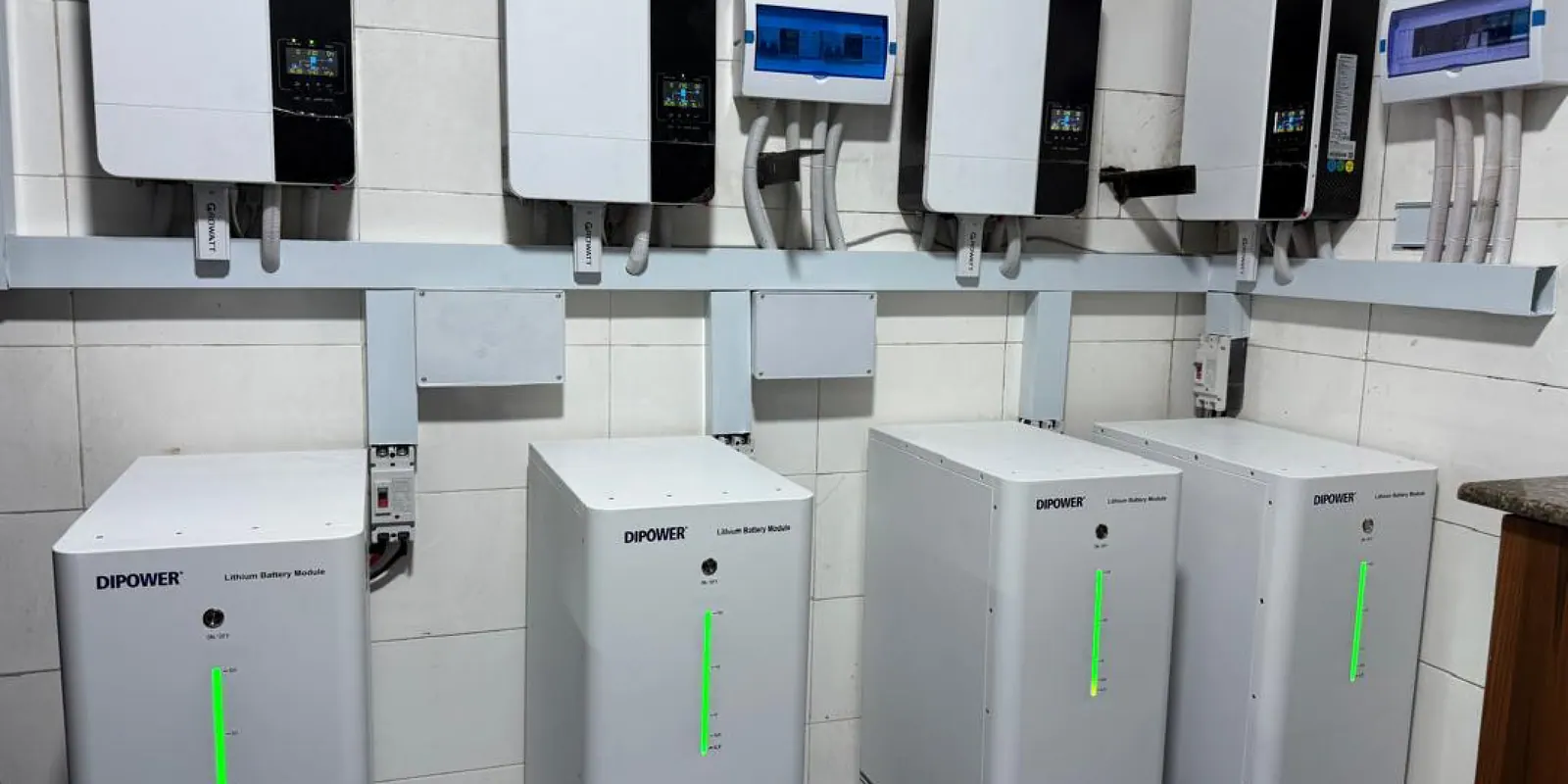
A 10kVA solar system is often considered for duplexes, offices, restaurants, clinics and shops with several refrigeration, cooling or motor loads. The correct design begins with measured demand—not with the assumption that a larger inverter automatically creates longer backup.
Step 1: identify the peak load
Add the watts of appliances likely to run at the same time, then account for starting surges from pumps, freezers, refrigerators and non-inverter air conditioners. A load audit should distinguish continuous demand from brief surge demand.
Step 2: calculate energy and battery capacity
Energy is power multiplied by time. A steady 2kW essential load running for eight hours uses 16kWh before conversion losses. Battery design must also respect usable depth of discharge and the maximum current allowed by the battery management system.
Step 3: size the solar array for recharge
Panels must cover daytime loads and replace the energy removed from the battery within the available solar window. Shading, roof direction, temperature, dust and conversion losses reduce real production below the nameplate figure.
Single phase or three phase?
The site's incoming supply and load distribution determine the answer. A three-phase facility may require a three-phase inverter or a carefully engineered multi-inverter arrangement. The choice affects protection, cabling and how loads are balanced across phases.